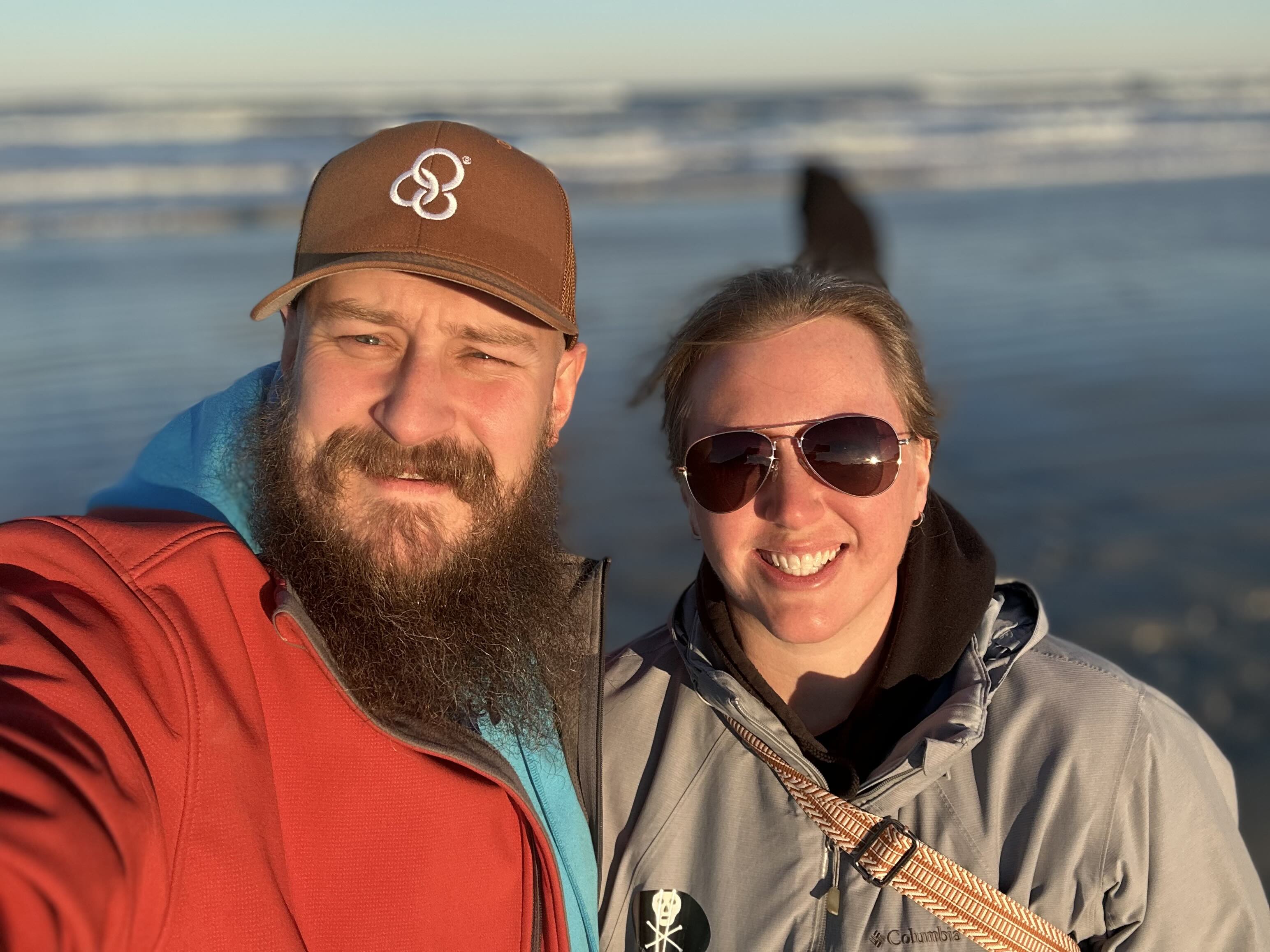
Eric & Kelly Jones
Eric's path to Castlewood ran through ministry, not accounting school. He taught theology at his alma mater, Colorado Christian University, then spent 4 years as a Campus Life Site Director for Denver Area Youth for Christ. When COVID pulled him out of in-person student ministry, he picked up bookkeeping for YFC USA's national finance team — and never really stopped. What started as billing chapters for insurance and service fees grew into active role in all aspects of YFC's finances. He didn't just watch ministry leaders get stretched too thin trying to be part-administrator, part-marketer, part-everything — he lived it, and burned out. That experience became the founding thesis of Castlewood: free ministry leaders up to do the work only they can do, by taking the books off their plate.
Kelly brings her own path to the business. She managed the day-to-day operations of an optical practice, then moved into banking, before stepping back from her career to raise and educate their three kids. That same steady, detail-oriented instinct now shows up behind the scenes at Castlewood, where she supports the practice so Eric can stay focused on clients.
Eric is the more idealistic of the two — occasionally lost in pie-in-the-sky thinking — while Kelly, just as detail-oriented but tuned to different things, is quick to pull him back to earth. Married sixteen years, including a year in Scotland for grad school with an infant in tow, they spend their free time hiking, reading, writing, and cheering at swim meets with their three kids: Calvin (13), convinced he's now taller than his perpetually-slouching father; Piper (11), horse-obsessed with a stuffed-animal collection to match; and Colin (7), pockets always full of bouncy balls and sticky hands, and already better acquainted with the neighbors than either parent. Rounding out the household: a dog, a cat, and one open chicken coop the family has agreed not to relitigate.
Eric, Kelly, and their 3 kids are members of Parker Evangelical Presbyterian Church, in Colorado.